ACTIVITY
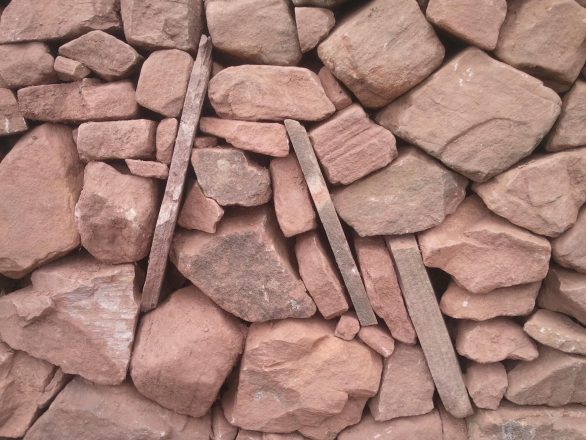
Antonio Gandano seeks to create liveable habitats, built with meticulous care using traditional techniques and natural materials. His huts are built with resources from the environs, so he works with various plant materials (cane, Johnsongrass, heather, coco-grass, marram grass, broom species, rye straw, etc.). His… wood is sourced wholly from woodland where replanting is guaranteed and his stone from near his worksites, and the lime he uses is processed traditionally in the lime pits of Morón. Since 1989 he has upgraded certain tools and materials to suit present-day needs. He is one of the foremost remaining practitioners of his trade in Spain.
The soundness and quality of his work are assured by his tools, his know-how acquired from day to day and his collaboration with other master hut-builders across northern Europe, with whom he keeps in close contact. He is also a member of the French master hut-builders’ association.
In 2002 he was awarded the master builder’s title of Maestro by the master artisans who taught him the craft over 13 years.
Antonio Gandano masters a variety of thatching techniques. Vernacular architecture offers diverse traditional thatched roofs with various names in different regions: teitos in León and Asturias, pallozas in Galicia, barracas in the Valencia region, chozas de bálago in the Cádiz area, taínas, chozas marismeñas, etc. These have differences in building structure and shape (rounded, rectangular, etc.), with walls of stone or mud, or also built with thatch.
TRAINING
The trade is a family tradition on the side of his father, who was one of his teachers. He was also taught by a craft builder from La Muela and others from Arcos de la Frontera. In work with lime, earth and straw, he has… been much influenced by the master builder Laurent Coquemont, with whom he often works.
TEACHING
Today he has two apprentices that he already regards as hut-builders and that have worked with him for eight and five years respectively. He has shared his knowledge in courses and presentations in various events and institutions, such as the Andalusian Historic Heritage Institute and… the Lime Museum of Morón or the La Algaba de Ronda centre, among others.